Tag: Premier League

  • Mikel Arteta: A midfield artist

    Mikel Arteta: A midfield artist

    Mikel Arteta, in his short managerial career has won both the FA Cup and Premier League, and narrowly missed out on the Champions League, losing on penalties to an established PSG team.

    Arteta as a player was a Spanish composer, probably under appreciated and under the radar, he was another Spanish midfielder with a fiery temper, but calming presence on the ball. If it wasn’t for the fine talent of the Spanish midfielders of that generation, Arteta would have been regarded much higher. His football intelligence has now spilled into his managerial career. He coached alongside Pep Guardiola, learning his craft and has since inherited an Arsenal team devoid of confidence, with fan channels tearing apart support and players careers for a few social media clicks, and he has built the gunners into a formidable force.
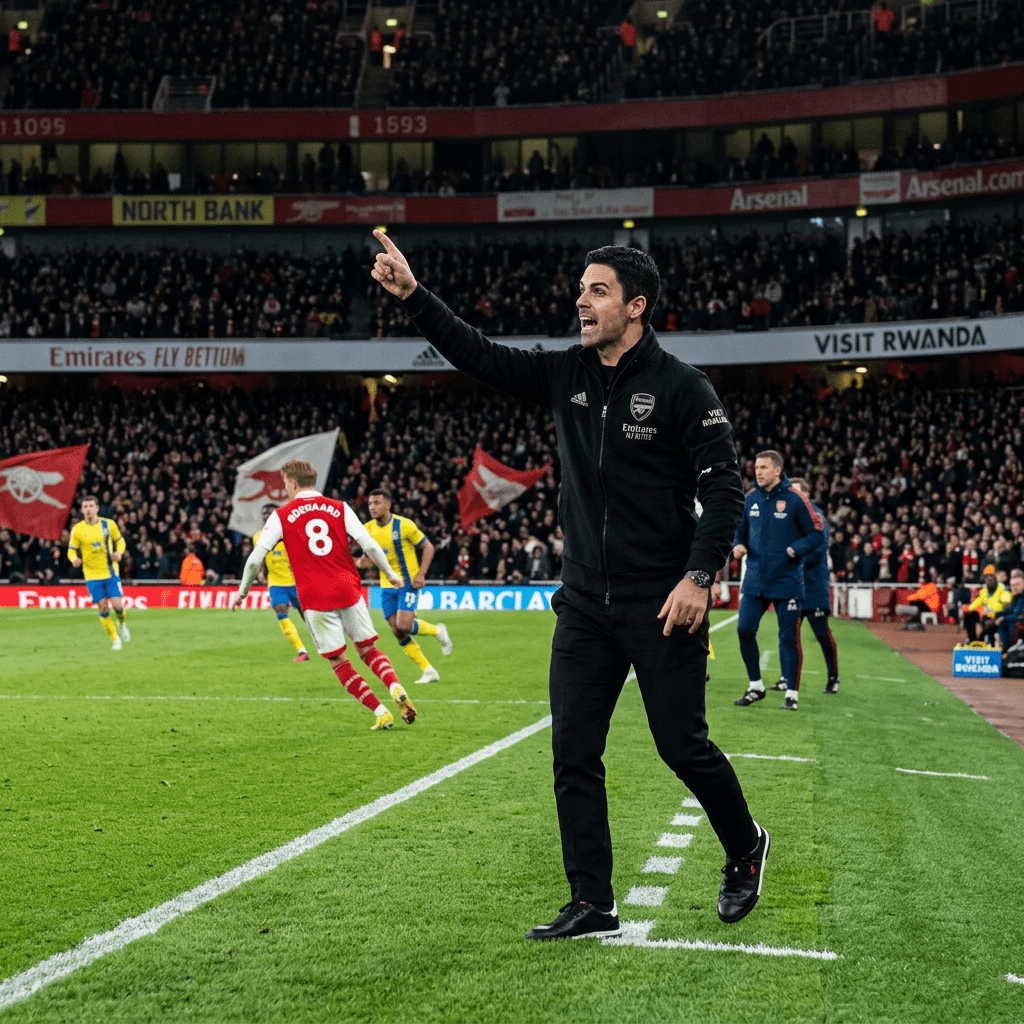
    Arsenal coach giving instructions on sideline during football match
    Arsenal’s coach actively guides his team during a lively match at Emirates Stadium.

    Arteta brought the Arsenal back, showed early signs of powerful leadership, instilled discipline and won trust of his squad, removed anyone who didn’t buy in to the process, and is now reaping the rewards.

    The media and fan channels and rival fans labelled the Spanish boss as a joke, always second, always the bridesmaid. Arteta didn’t let that stop him though and now, no matter what, is a Premier League winner as a manager despite large parts of the football community willing him to fail.

    Where Arteta is most impressive, is his ability to find midfield talent. Look at the current crop of Arsenal midfielders, and they have all been artistically crafted around traits that Arteta himself possesses. Then, added to with areas that Arteta lacked, creating one of the most balanced, disciplined, powerful and creative midfields the Premier League has seen in recent years.

    Arteta’s most obvious and similar current midfield counterpart is Martin Zubimendi. The Spanish holding midfielder operates in lots of the same spaces Arteta did, with a calming presence, good passing capabilities and composure, and a willingness to defend. In his first Premier League season, Zubimendi hasn’t shone brightly as a loud and dominating figure, much like Arteta wasn’t. He has shown his class though and despite some challenges should keep progressing and bey a key part of Arsenal’s midfield for seasons to come.

    The next comparative midfielder is Norweigan Martin Odegaard. Though not signed by Arteta, he’s clearly a favourite, club captain and progressed as part of the Spanish system at Real Madrid, similar to Arteta at Barcelona. Odegaard commands respect and brings control, but offers more creative flair than Arteta ever did. Both have the ability to control the game, albeit in different areas of the midfield.

    Declan Rice is probably someone Mikel Arteta absolutely loves, he has the physical attributes that Arteta lacked, and the mental attributes of a winner that Arteta is trying to instil in his players. Technically, Arteta probably still possesses better levels of calm and composure, but Rice makes up for that in his shear athleticism, the Englishman has a relentlessnes that makes him one of England’s greatest midfielders. Something which Arteta undoubtedly brings out in him.

    One thing many fans dislike about Arteta is his animosity on the touchline, but is important to remember here that, that is who he is and that is how he drives his team on to greatness. He cares, he plays every pass, wins every tackle, he is agressive and he positively orcherstrates his side’s performance with his passion and hunger on the touchline.

    He is undoubtedly a fantastic coach, and one of the best recent examples of that is the progression of Miles Lewis-Skelly. Left back Lewis Skelly was left out of Arsenal’s defence for a long while, with fears of his Arsenal departure looming. He then appeared in midfield, and was a breath of fresh air for an Arsenal midfield who looked tired and needed a refresh. Then, after his resurgence, the midfielder spoke about how this had been the plan all along and how his move into midfield had been worked on over the previous months. An excellent coaching example, and now Lewis-Skelly could progress to be another great midfield crafteed by Arteta. He has great physical attributes, a steely determination and passion, and also levels of composure that lots of the young Arsenal players coming through seem to possess.

    Here are four examples of how Arteta has crafted a midfield on his traits, his understanding and his coaching ability, of course a midfield maestro has managed to build a squad with a world class midfield. The individuals may not be the very best, but with three Premier League seconds, a title win, a Champions League final and semi final in recent seasons, the Arsenal midfield undoubtedly operate as a world class unit. All thanks to the creation by Mikel the Artist.

  • How Rodri Redefines the Destroyer Role in Football

    How Rodri Redefines the Destroyer Role in Football

    The destroyer’s role is far from as dramatic as it sounds. The destroyer is the one who tries to bring order and control into a game of many variables, paths and patterns.

    The player in the middle of the pitch to break up play, regain control, and begin a planned attack. The best example in the current game is Manchester City’s Rodri. Any young midfielder should study Rodri and his movements to understand just how key he is to Manchester City’s success, he is a serial winner, who’s football intelligence combined with his physical attributes make him a destroying force to be feared in the heart of midfield.

    Football is of course a game of balance, and Rodri’s success has also been impacted by the incredible talents around him, both at City in players like Bernardo Silva, and Phil Foden – then with Spain Pedri plays alongside Rodri and the pair cause havoc to whoever they face.

    One thing to note is that this role cannot operate alone, if you look through the English footballing pyramid, you’ll see that the destroyer role can be somewhat of a luxury, and is often a part time position operated by midfielders who need to put on multiple hats and switch into more traditional box to box roles to help their teammates.

    The Destroyer usually operates as a single pivot in the deepest point of the midfield with a role of breaking up an attack before it develops, collecting the ball and moving it along. Simply put, search and destroy.

    Another fine operator of this role in recent times is Casemeiro, more during his Real Madrid days. He brings his different traits to the game though, perhaps more aggressive and not as composed or effortless as Rodri, but a fine and fiery example of the destroyer role in action.

    In the ever developing game of football, this role chops and changes, if you look back 20 years, the Makelele role as it was known, was an early example of this destroyer. Now it has been brought into the modern day by players like Rodri, and is now being progressed further by someone like Arsenal’s Martin Zubimendi.

    Zubimendi again does not possess the physical prowess of Rodri, nor is he as regarded, but he’s undoubtedly a fine talent who has adapted to the Premier League and now should push on in his position under management of Mikel Arteta.

    The destroyer role is adapting and changing, but it is a line of midfield defence that is not be underestimated, and I’m sure the role will progress further as they all do, but for now we must study Rodri to know further just how the destroyer operates.

  • Understanding midfield traits: Composure

    Understanding midfield traits: Composure

    A word often heard on the football pitch is composure, it’s a trait that is regularly tracked statistically, and midfielders all have to demonstrate considerable levels of composure in specific moments of every match.

    The elite midfielders, Sergio Busquets, Xavi, Frenkie De Jong, display the highest levels of composure every time they enter the field. There are undoubtedly levels to this trait, key identifiers, and measures used in football and across sport to support players staying calm and composed under pressure.

    At its core, composure is the ability to stay calm, focused, and decision-capable while under pressure that would normally provoke a fight-or-flight emotional response. It reflects mental resilience and decision-making in high-stakes or fast-paced situations, such as when facing an aggressive defender, taking a crucial penalty, or making a critical pass in a crowded midfield.

    Composure is an action

    One sports psychologist frames composure more precisely as a relationship to outcome: pressure can be defined as an expectation to create a result, and how we perceive our ability to control that result shapes what we focus on, which in turn shapes performance. Composure, on this account, isn’t the absence of pressure — it’s a particular way of relating to it.

    Composure can therefore be described as the action you take, in reaction to levels of pressure. One way of building composure through training is a drill receiving the ball with multiple defenders around you, and you have to keep that ball for 5-10 seconds. You can learn a lot about a player from this drill alone, in a match scenario there will be the option to pass, play the ball on and move away from pressure, which is a good action to take, but when that option isn’t on you can really see how a player reacts when pressure builds.

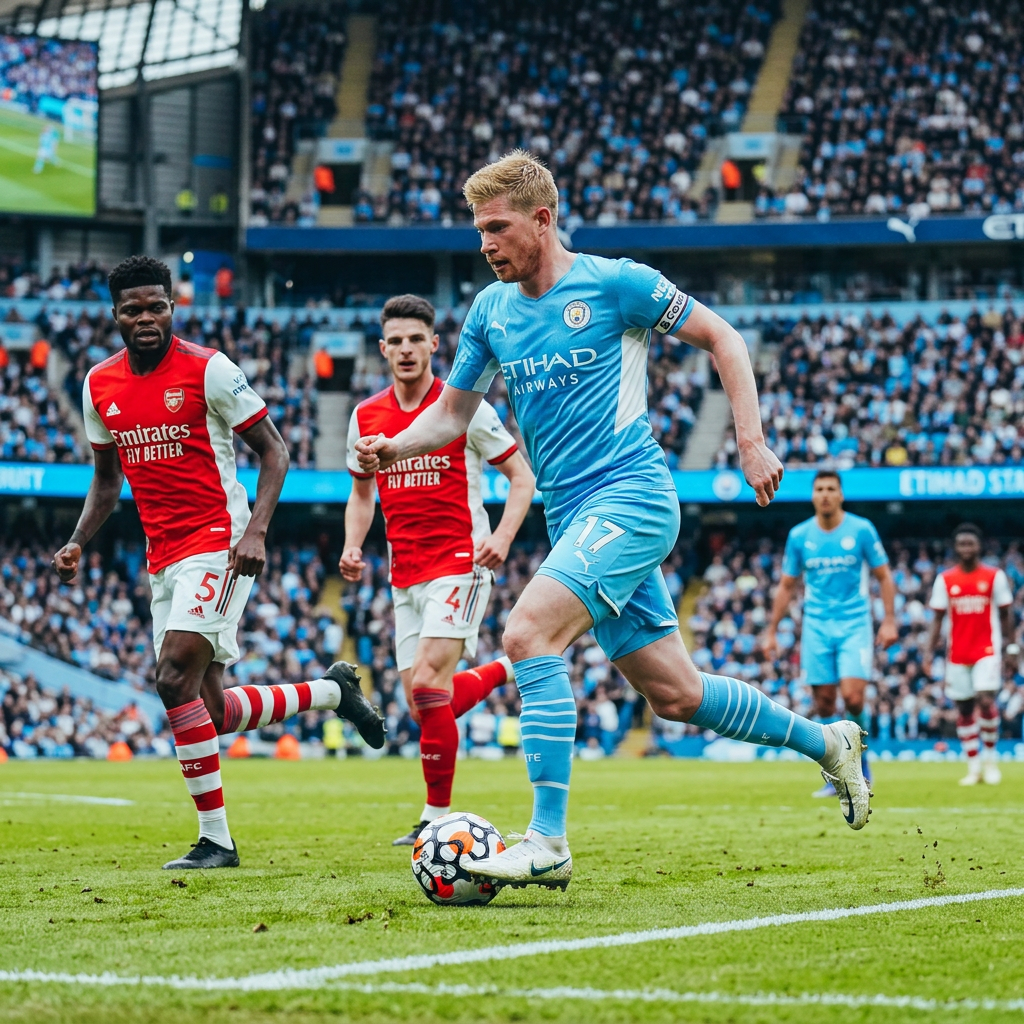
    Manchester City player Kevin De Bruyne in blue dribbling the ball with Arsenal players nearby
    Kevin De Bruyne controls the ball during a tense match against Arsenal

    Attack vs defence

    Composure can show in different areas of the midfield, an attacking midfielder like Kevin De Bruyne or Martin Odegaard demonstrate composure to thread key passes in the final third, whilst composed defensive midfielders like Rodri or Joao Neves demonstrate composure when breaking up an attack or controlling the tempo of a game.

    Some footballing greats at using composure to control the overall flow of a match are undoubtedly Andrea Pirlo or Paul Scholes. Even a progressive holding midfielder and current Manchester United Manager Michael Carrick was well known for his often underrated skill of staying calm under pressure. A trait which undoubtedly help him with management.

    Composure across sport

    Composure is obviously a trait adopted in every day life, understanding how you can stay calm under pressure is a great way of managing stressful situations.

    As with a lot of traits that can benefit everyday life, we can look to sport to enrich our understanding. Composure transcends across sport, think about a quarterback in American football having to stay calm among the chaos to remember a selected play and adapt real time to throw to the correct passing route.

    A golfer needs to handle the nerves of being on the 18th green and having to hole a put for the win, their is no doubt that sportsman contain and harness a high ability to stay calm in pressured situations. A great example of composure controlling the flow of a sport is in rugby, where the scrum half keeps up with every action to be there to play the next pass and start the next phase of play.

    Coming back to football, recently observing Joao Neves, he sometimes operates like a scrum half, following his PSG midfield teammate Vitinha into every challenge and opportunity, just drifting behind ready to pick up the pieces.

    A batsman in cricket is another great example of composure in sport, some of the greats like Joe Root or Virat Kohli will often be in bat for hours on end, facing hundreds of balls where one slip up and they are out. There are clearly levels to composure in this field, a regular sunday cricketer often wouldn’t see a lot of the balls being bowled due to their high speed, never mind execute the right shots.

    The batsman’s ability to stay calm under pressure is more similar to a striker in football, where you have to stay calm when opportunities don’t come and be ready to strike when they do.

    Composure is refusal

    Overall, composure can be harnessed through routine, such as a batsman repetitively mastering a stroke, or a golfer constantly practicing a put. However, that can only take you so far, and your ability to remain composed in the moment is a refusal to catastrophise and give in to that fight or flight reaction and to make the right decision. All of the best sportsmen, regardless of sport, operate with high levels of composure and that is undoubtedly a factor in how they are able to achieve the things they can.

  • Elliot Anderson: England’s Midfield Gem for 2026 World Cup

    Elliot Anderson: England’s Midfield Gem for 2026 World Cup

    The 2026 World Cup is just around the corner and Midfield watch will point out some of the best midfield talents lining it up in North America, starting with England’s emerging talent Elliot Anderson.

    England soccer player wearing number 22 running on practice field
    An England soccer player in white jersey training on the field.

    Anderson – new kid on the block

    Some of England’s best players over the years have been energetic, hard working midfielders with a dogged spirit, ready to go to war for their country.

    Anderson is the modern day equivalent, and his rise in the Nottingham Forest team is interesting and a bit of a throwback to days of old where Forest had England international’s on the regular.

    Even within the last year, Anderson has gone from the England u21s into number 8 for the senior men’s squad. Anderson now has a chance to prove just the talent he is, his performances in this world cup can secure his place in England’s team for years to come.

    One of the best things about Anderson is that he hasn’t reached his ceiling yet. With seasoned pro’s like Declan Rice, we know what we are going to get. He is incredibly talented, but Anderson is a raw talent, with tenacity and strength, pace and technical ability that could surpass Rice. Rice is also the perfect pair in the heart of midfield, because in some ways the pressure is on him, Anderson can shine with the pressure off next to the experienced Rice.Subscribed

    Anderson made 33 starts in the Premier League in 2025/26, and played just under 3,000 minutes (2954). His defensive contributions only highlight his workrate, he made 457 defensive contributions, compared to Rice (more advanced role) and his 163. Anderson also made 276 recoveries compared to Rice’s 154. This also shows Rice has been playing in a more attacking role, his goal and assist contributions far outshine Anderson, but that just shows how these two could be perfect, and sometimes the dirty work from Anderson is going to be exactly what makes the difference.

    Defensive minded, but no attacking mug

    Defensively, Anderson stood out last season, as a midfielder there is no doubting his defensive capabilities. The former Newcastle midfielder is no mug when it comes to attacking, and progressive, positive football.

    Going back to our comparison between Anderson and Rice, Anderson has over three times Rice’s successful dribbles – 44 vs 12.He’s also played more agressive with 270 duels won, and on his way he’s earned 72 fouls.

    When you look at the England squad over the last ten years, they have massively lacked a real all round midfielder, and now they have 2. Rice can dig deep and perform, but Anderson could glide across the pitch helping England to a successful tournament.

    The spine

    The best international sides have a core group of players who can carry their side to victory. Elliot Anderson could be part of that, if things go well in the World Cup, the midfield of Anderson, Rice and Bellingham could carry England for the next 6/7 years.

    At this moment in time Anderson is an underrated cog in the wheel, and this is his chance to shine, break onto the world stage and prove his talents in an exciting and strong England team.

  • Championship atmosphere says it all: Things we learned from Sheffield United v Leeds

    Championship atmosphere says it all: Things we learned from Sheffield United v Leeds

    We knew Sheffield United V Leeds was going to be a great game, whatever the result. Two top of the table sides going at it at a packed Brammall Lane.

    For me it immediately highlighted what an institution the Championship really is. If this was a Premier League fixture, it would not be the same. It probably wouldn’t be on television, which may be good may be bad, but it really felt to me like it being a top of the table Championship clash made all the difference.

    Two northern powerhouses put on a great display.

    We are in a really dangerous time for football at the moment, it looks like the teams at the top of the Premier League are becoming more and more separated from those below them, a lot of the league looks stale and plays stale.

    sport

    The results game has taken over and there is no room for the creative individual anymore. We might be at the beginning of the end for the Premier League and we aren’t aware, but the academy robot has crept into football, taking away from the individual brilliance and flair that made it the game we love. That is not to take away from any current players or up and coming academy players, they are a product of the environment that has been made for them.

    We of course still get to see fantastic football and fantastic players, but the passing round the back and American Football style game management and control and data focus for me has meant we see less and less top games of football each season.

    Enter the Championship, we get the top class around the back football, with an extra bit of edge. The edge is what provides the value. If you regularly attend matches, you spend an absolute fortune, and value is what you deserve. There is no better value than some of the football we see in the Championship. Even further down the pyramid, where more is on the line for the players each week as performances mean new contracts which means survival as a lower level footballer.

    I do fear that we are seeing the end of Premier League football as we know it. It’s right in front of us and we can’t stop it. It is highlighted further by the excellent offering in the Championship. 15 Years ago 8/10 games in the Premier League were like that Championship fixture. Now you are lucky if there is one free flowing, end to end attacking fixture a week. Records and stats and xG might be better for it, but the eyes of the spectator are getting a watered down product week in week out, with only a few exceptions.

  • Things we learned from a dramatic League Two comeback

    Things we learned from a dramatic League Two comeback

    What We Can Learn from Successful Professional Footballers

    After watching Cheltenham Town’s dramatic 2-2 draw with Walsall—where they scored two goals deep into stoppage time—I started thinking about what it really takes to succeed as a professional footballer in League One and League Two.

    Technical ability is important, but that alone isn’t enough. The lower leagues demand more—traits that separate those who survive from those who fade away. Cheltenham’s determination in that game was a perfect example of why certain players thrive at this level.

    Here are two key attributes that can make all the difference.

    Max Effort, Max Reward


    One of the biggest factors in lower-league football is work rate. The schedule is relentless, with players often playing twice a week. Unlike Premier League stars, they don’t have access to state-of-the-art recovery facilities or world-class sports science teams to help them bounce back. But the expectation remains the same—give 100% every time you step onto the pitch.

    For clubs like Cheltenham, fans are the lifeblood of the team. They spend their hard-earned money to watch and support their local club, contributing directly to players’ wages. If a player gives their all—chasing every ball, pressing non-stop, fighting until the final whistle—fans will appreciate it.

    At this level, attitude is everything. Determination and resilience can take you just as far as talent.

    Adapt to Survive


    League One and Two football is a world away from academy setups, where players are often taught a specific way of playing. In the lower leagues, if you’re too rigid in your approach, you could find yourself struggling.

    Managers change, formations shift, and different tactical demands come into play. The more adaptable you are, the more valuable you become.

    Take Cheltenham as an example. Over the years, I’ve seen players thrive by adjusting to new roles. One season, the team switched from a 4-4-2 to a 3-5-2. One central midfielder dropped into a centre-back role and eventually became club captain, leading the team to promotion. Another midfielder transitioned to right wing-back and earned a move to a higher division.

    On the other hand, I’ve also seen players resist change—strikers unwilling to play on the wing, attacking midfielders reluctant to take on a deeper role. More often than not, those players end up moving on, struggling to find stability.

    Of course, every player has their preferred position, but if you want to build a long career in the lower leagues, you need to be adaptable. Do what the manager asks, embrace new challenges, and give yourself the best chance to succeed.

    Final Thoughts


    Talent gets you noticed, but attitude, effort, and adaptability keep you in the game. Whether you’re fighting for survival or pushing for promotion, these qualities make all the difference.

    If you’re willing to work hard and embrace change, you’ll have a much better chance of making it in professional football—just like the players who fought until the final whistle in Cheltenham’s incredible comeback.

  • Things we learned about Manchester United

    Things we learned about Manchester United

    As Manchester United bow out of the FA cup after defeat to Fulham, it’s time to take a look at the serious problem at Old Trafford at the moment.

    Manchester United, arguably the biggest football club in the world, with one of the most expensive squads ever assembled, and one of the most successful clubs ever, is a mess.

    Since the departure of the irreplaceable Alex Ferguson Manchester United have always looked a shadow of their former selves. What we see right now however in 2025 is crazy.

    An unthinkable scenario 15 years ago. A new Manager, still getting to grips with the league, but not performing as a Manchester United Manager is expected, and a group of players far below the quality of what it takes to be a Manchester United player.

    It says it all when the returning Jonny Evans has been the most Manchester United player this season. He is probably the only one who has shown what it means to wear the badge.

    Sport

    Photo by Fabricio Trujillo on Pexels.com

    Former players like Roy Keane have come out and questioned the standards and leadership of the squad and it doesn’t take a genius to realise that those leaders in the dressing room aren’t there.

    Bruno Fernandes, the team captain, is captain because of the example he sets on the pitch. However, his attitude week in week out looks horrible. If a decision doesn’t go his way, or a pass doesn’t come his way, the arms are up and the head drops. The tracking back becomes half hearted and it just isn’t good enough for a Manchester United captain.

    There is obviously a number of problems rooted within, away from the pitch, because you would think the leadership behind the scenes would want to pull from the wealth of experience of ex players and bring them in to help build and support the current crop of players. They have a very young squad at the moment that at times look lost.

    The attack is probably the worst Manchester United attack in the 21st century. There may be a lack of top class world strikers around at the moment, but their certainly aren’t any in the Manchester United squad.

    So much needs to change, and it begins at the top. The fire has really gone out at Manchester United and it is not an easy fix. Leadership and responsibility needs to come from above and be projected onto the pitch with better recruitment and then performances from players with the right attitude.

    The United starting line up has gone from 11 leaders, to maybe one or two, and it’s a shame to see. Such a big club could offer so much more and should be competing for league titles year in year out, but at the moment they are well off the pace.